
As pickleball continues to expand into commercial facilities, retail channels, and organized tournaments, B2B buyers face growing pressure to ensure equipment meets recognized quality and safety standards. Unlike consumer purchases, business-to-business procurement carries additional liability, reputation, and reorder risks.
Compliance in pickleball equipment is not just a technical formality—it’s a commercial advantage. Products that meet clear standards are easier to sell to clubs, pro shops, facility managers, and tournament organizers.
B2B buyers are often responsible for equipment that will be used by many people over long periods. A paddle that fails mid-match, breaks prematurely, or causes discomfort can create real problems for the buyer and their customers.
Key reasons to prioritize compliance include:
While specific standards may vary by market and governing body, B2B buyers should evaluate every paddle against a consistent quality checklist.
The paddle face, core, edge guard, and handle should all be inspected for consistency. Common issues include uneven surface texture, delamination, weak edge bonding, and poor handle attachment.
Paddle weight affects player comfort and injury risk. Models that are too heavy or poorly balanced can cause arm fatigue, especially in high-volume club environments.
B2B suppliers should be able to provide evidence of durability testing, including:
Pickleball paddles do not typically present the same hazards as contact sports equipment, but they should still be free from sharp edges, loose components, and structural defects that could cause injury during normal play.
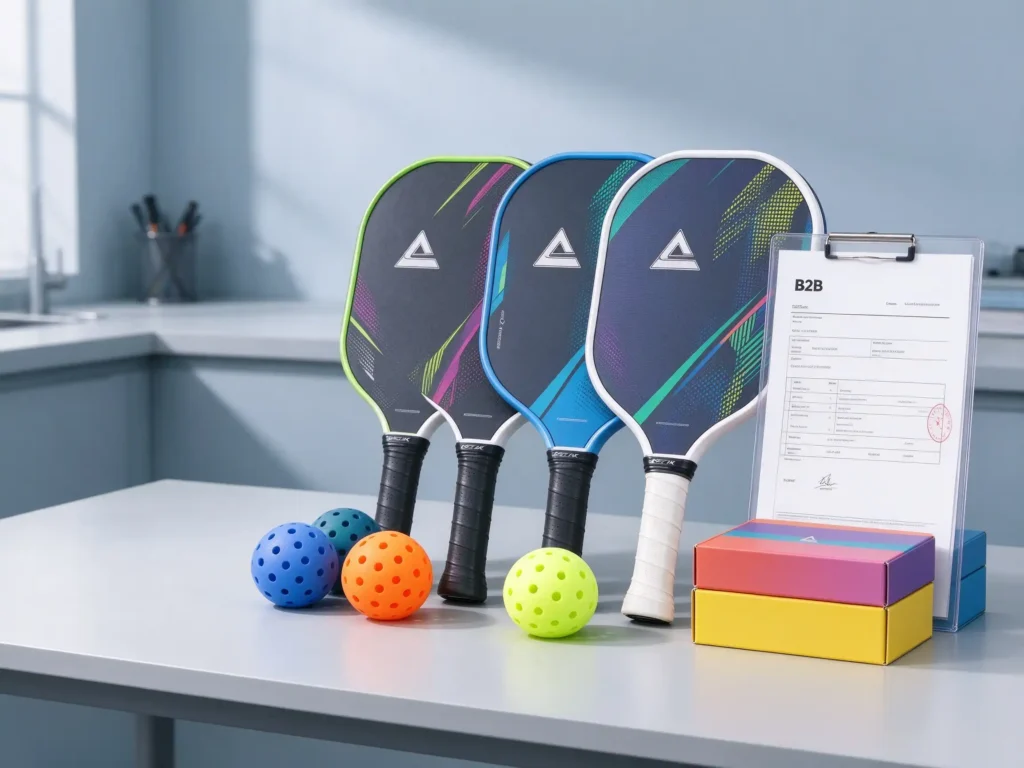
B2B buyers should expect suppliers to provide documentation that confirms product consistency. While certification requirements depend on the market and application, common documents include:
For paddles intended for tournament play, alignment with recognized governing body standards is particularly important.
A practical quality inspection process should cover three stages: pre-shipment, incoming receipt, and post-sale monitoring.
Before placing a large order, request samples and test them under real playing conditions. Verify weight, feel, durability, and construction quality against your internal standards.
When stock arrives, inspect random samples for:
Track returns, warranty claims, and customer feedback. Common red flags include:
Compliance and quality inspection are essential components of a reliable B2B pickleball equipment program. By establishing clear standards, documentation requirements, and inspection procedures, buyers can reduce risk, protect their brand, and build stronger relationships with suppliers and customers.
ALLWAKE is a professional manufacturer and supplier of high quality pickleball paddles based in China. We specialize in R&D, production, OEM/ODM customization, and global distribution.